Whitepaper
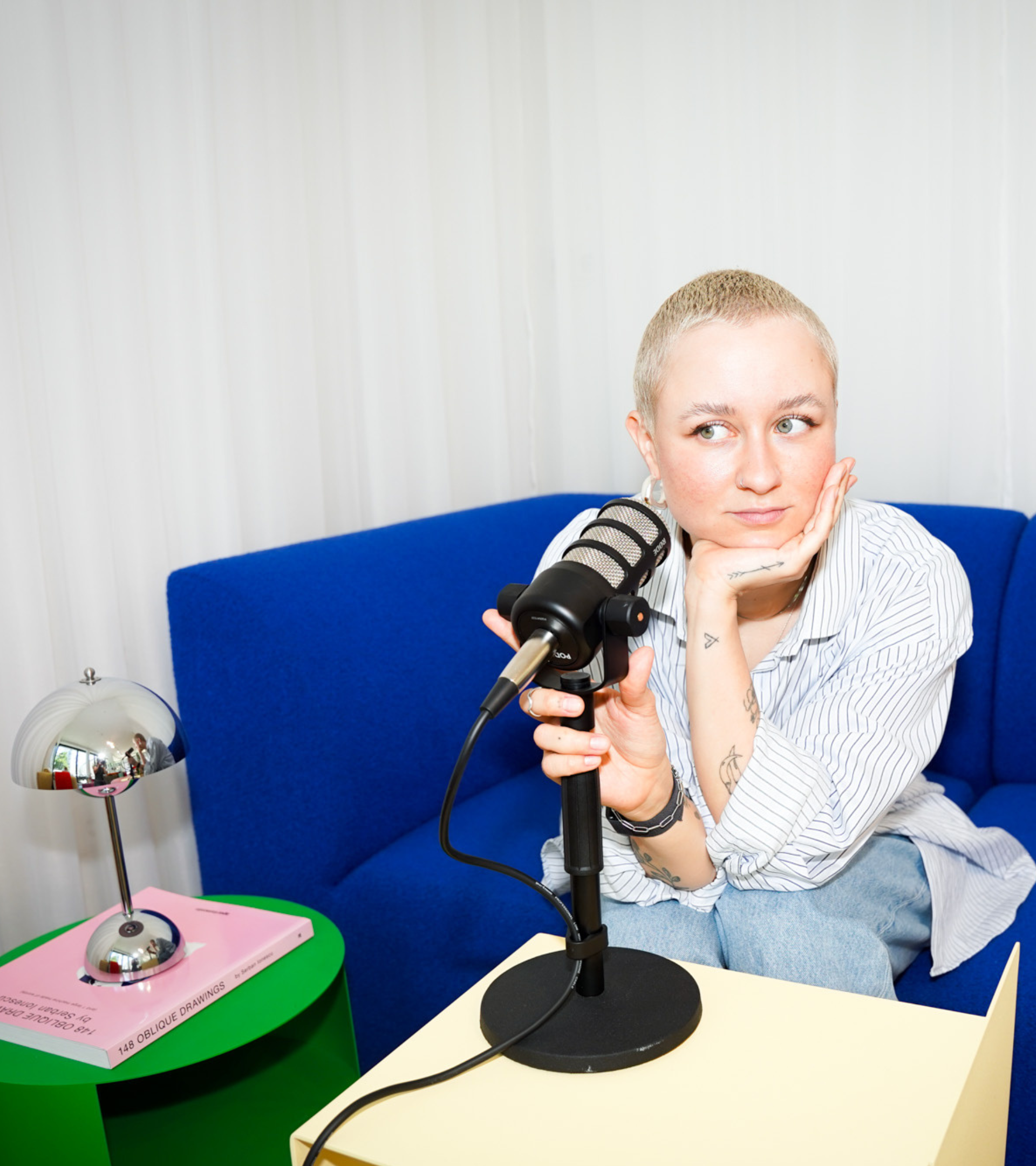
The topic is set, the briefing is aligned, and the date is locked in. Then, the first question comes out of left field. Founders, CEOs, and experts usually know their subject matter inside out—but interviews follow different rules than sales calls or internal updates: they are faster, more journalistic, and less predictable.
That is exactly where media training comes in: not as a polish for your rhetoric, but as targeted preparation for the reality of newsrooms. In this whitepaper, we show why good interviews rarely happen by chance—and why they most often fail.
We provide a practical guide plus a quick check to see if your team is interview-ready.
For anyone who speaks in public and wants to be not just heard, but understood. Read it for free now.
Enjoy the read.

The topic is clear, the request is aligned, and the date is in the calendar. There is even a detailed briefing with key questions, punchy bullet points, and pre-written answers. Then, the conversation begins.
The first question comes out of left field, the second goes straight for a critical point, and the third isn't even a question—it’s more of a loaded statement. Suddenly, the interview feels less like "I'll just quickly explain what we do" and more like: Okay, this is getting serious.
But don't worry. That is exactly what interview and media training is for.
Founders, CEOs, and experts don't need it because they can't speak clearly. Most of the time, they are excellent at that. They know their topic, their company, and their market. But interviews follow different rules than sales calls, internal updates, or panels. They are faster, more journalistic, and more unpredictable—and they rarely forgive you if the most important point only comes after three minutes of small talk.
Anyone who speaks in public shapes how a company is perceived: as clear or over-complicated, as credible or evasive, as relevant or just preoccupied with itself.
Media attention is a scarce resource. At the same time, the volume of interchangeable content is growing: AI-generated comments, recycled market theses, and LinkedIn posts with plenty of "relevance" but little substance. In this environment, speakers who can contextualize a topic, stay calm under pressure, and sound like real people are becoming more important. It’s called Thought Leadership.
Ideally, a good interview looks effortless to an outsider: the answers are spot on, complex topics become understandable, and critical questions receive clear responses. In the end, a few key points stick that were exactly what was intended. But this rarely happens by chance.
Interviews are high-pressure situations, even when they seem friendly. They take place under time constraints, there are journalistic expectations, and there is little room for long-winded explanations. Those who ramble lose the audience's attention; those who stay too technical lose people outside their own bubble; those who hide behind generalities fail to deliver a story.
Then there is the editorial perspective: journalists take time for a conversation, prepare thoroughly, have to advocate for the topic internally, and ultimately have to craft a story from the material that is relevant to their readers, viewers, or listeners. If an interview sounds primarily like a product pitch, lacks substance, or fails to provide quotable statements, it can easily happen that no piece is published at all.
This is why these factors are doubly critical for effective PR, as earned media thrives on relevance and trust. In Germany, according to the Reuters Institute Digital News Report 2025 45 percent of the adult online population generally consider most news to be trustworthy.
Media remains an environment where perception is formed differently than on other channels. It is all the more frustrating when a strong appearance fails because speakers answer in ways that are too long, too vague, too technical, or too promotional.
Media training prepares speakers for real-life interview situations: print, online, TV, podcasts, panels, and live formats. Depending on the occasion, the focus is on presence, voice, quotability, or responsiveness.
Great training starts long before the first question is asked.
What is the occasion? What is the person's role in the interview? Which topics are set, and which might come up? Where are the risks? What key messages should stick? What can be said? And how do you turn an internal technical topic into a statement that is relevant to readers, viewers, or listeners?
After supporting more than 500 interviews in 2025 with companies like TeleClinic, trivago, ionity, and komoot, we have developed a media training program: featuring individual preparation, a journalistic perspective, interview simulations, and personal feedback. The result is concrete takeaways: How do I come across? Where do I need to communicate more clearly? What simple hacks can help me prepare?
"Many experts know their subject inside and out. Often, the problem isn't the content, but how it's delivered. The uncertainty usually only sets in once the camera, microphone, or critical follow-up questions are introduced."
Adriana Hofer, Team Lead & Senior PR Manager
Most interviews don't fail because of one major blunder. Often, it's the little things: an answer takes too long, technical jargon doesn't help anyone, or a good idea is phrased so cautiously that it loses its impact. These are exactly the things you can practice.
Many experts know too much. It sounds like a luxury problem, but in an interview, it is often the problem itself.
Good interviews require guidance rather than thousands of technical terms: What is new? Why is it relevant? For whom does this change things? Instead of talking directly about a platform, feature, or product logic, an answer can start with the actual problem: "Previously, companies had to...", "This is changing right now because...", "For customers, this means...".
Many people go into an interview with too many points: three product benefits, two market theses, a founder story, and a few numbers. It looks prepared, but it often results in no single message really sticking.
Before an interview, it should be clear which idea needs to resurface in the article, segment, or conversation. Just as important: Who am I telling this to? An interview for a trade publication requires a different level of depth than a conversation with a business desk or a general interest medium. If you keep the medium's target audience in mind, you automatically speak more relevantly.
It’s not about a memorized sentence, but rather an internal focus: a market observation, a stance, a specific problem, or a strong example.
Yes, it happens. And more often than you might think. Our PR managers could tell you a thing or two about that.
Founders, CEOs, sales leads, and executives with frequent client contact are often excellent at explaining their company. However, expectations shift during an interview: journalists rarely look for a polished product pitch. They are interested in relevance, context, conflict, perspective, and sometimes even contradiction.
Those who jump too quickly to features, benefits, or "we are the leading solution for..." make it difficult for editorial teams. The company might still be interesting, but the journalistic hook is missing.
"An interview is not free advertising space. If you only talk about your own product, you waste the actual story: What current topic does my company connect to, and why is that relevant to journalists and their readers?"
Malin Zeuchner, Sr. PR Manager
This tricky scenario is often underestimated: Rationally, you know that follow-up questions are part of a journalist's job. Yet, in the moment, it feels different when topics like funding, competition, growth, layoffs, regulation, or a past decision are suddenly on the table.
That’s when your brain briefly switches into defensive mode. Your answer becomes longer, more cautious, overly contextual, or—just as damaging—curt and snappy. You explain too much, too little, qualify too heavily, or try to dodge the question. This is exactly what sometimes makes an answer seem more critical than it actually is.
Interview training helps you experience this moment beforehand. Which question would annoy me? Where am I sensitive? Which criticism is justified? Which figure needs context? How do I calmly draw a line?
If you have an answer to these, you don't have to pretend everything is easy. It is enough to stay composed.
You can be completely correct in terms of content and still come across differently than you intended: arrogant, grumpy, authentic, too controlled, or so desperately trying to appear confident that you seem stiff.
Often, it comes down to habits, nervousness, or the attempt to appear extra professional. In an interview, these patterns are immediately visible: in pauses, eye contact, pace, body language, gestures, facial expressions, voice, or filler words.
Good interview training makes these things visible without changing who you are. No one needs a polished, artificial spokesperson persona. It becomes interesting when your impact matches your message and, above all, feels authentic.
Sometimes, surprisingly small solutions are enough. In one training session, it helped a speaker to place a few sticky notes on their laptop: core messages, key figures, a few mental anchors—simply a small support that provided enough confidence to speak more freely.
A whitepaper is no substitute for training. Even so, speakers should be able to answer a few questions before every interview.
Preparing for a TV interview the same way you would for a written Q&A is a missed opportunity. For TV and video , what matters is presence, short sentences, eye contact, lighting, sound, and background. For podcasts and audio , your voice becomes more important: pace, pauses, emphasis, and articulation. For print and online , the ability to be quoted effectively is often the deciding factor. For live formats , it helps less to have scripted answers than to have internal clarity: What is my position? Where do I disagree? What is my contribution to the debate?
First of all: Good training is individual. At getpress, it starts with a needs analysis: Who is speaking, for what occasion, and in what format? Which topics are sensitive? What kind of impact do we want to achieve?
This is followed by preparation: reviewing past interviews, your LinkedIn profile, company portraits, previous messaging, and potential pain points. In our training, we always work with two experts, bringing two perspectives together: a journalistic role that probes and challenges, and an observational role that reflects on impact, structure, and language.
The session combines theory and practice: media logic, core messaging, conversation management, and specific techniques for handling critical questions. This is followed by a simulation—realistic, tailored, and featuring spontaneous follow-up questions. We provide concrete feedback, because telling someone to "be more confident" doesn't help. Instead, we say: "Your answer starts strong but loses focus after the second sentence," or "Using the word 'actually' takes the punch out of your statement."
"The biggest 'aha' moment often comes during the interview simulation. When an answer is spoken aloud, questioned, and reviewed together, many people quickly realize for themselves what is already working and where they are still getting in their own way."
Malin Zeuchner, Sr. PR Manager
Companies today produce more content than ever before. At the same time, it is becoming easier to generate content quickly—and harder to identify real substance.
Trustworthy, high-quality, and accurate content is becoming increasingly important in an environment of synthetic mass content, deepfakes, and toxic debates. The Edelman Trust Barometer 2026 also shows how central trust remains for companies.
An interview is one of the few moments where people get to experience how someone thinks, reacts, prioritizes, and explains. You can prepare for it, but you cannot fake it.
“An interview is one of the few moments where strategy, stance, and credibility become visible all at once. That is exactly why you shouldn’t wait until the request is already on your calendar to start practicing.”
Benjamin Gebien, CRO – Chief Revenue & Relations Officer
If you feel uncertain about several of these points, it’s no big deal. It’s actually a great reason to start working on them.
Speakers rarely have a knowledge problem. It is often about translation, timing, impact, or a lack of practice in critical situations.
Interview training addresses exactly that: clear messaging, media logic, response techniques, body language, and how a person comes across when speaking outside of a prepared setting.
The goal is not perfection. Please, no—nobody wants to consume that. Perfect interviews quickly sound sterile; good interviews sound clear, credible, and prepared enough to remain natural.
Or put another way: those who speak in public don't need to know every answer by heart. But your own line should be clear before the question comes that wasn't in the briefing.
We prepare founders, CEOs, and experts specifically for interviews, podcasts, TV formats, and critical media discussions—individually and in a way that reflects the reality of newsrooms.
If you want to know how interview-ready your speakers are, we would be happy to discuss a suitable format: from a compact media training workshop to concrete preparation for a media inquiry.
Let’s talk.
©
0
getpress GmbH



%20(45).png)
).png)
%20(45).webp)
%20(1).webp)